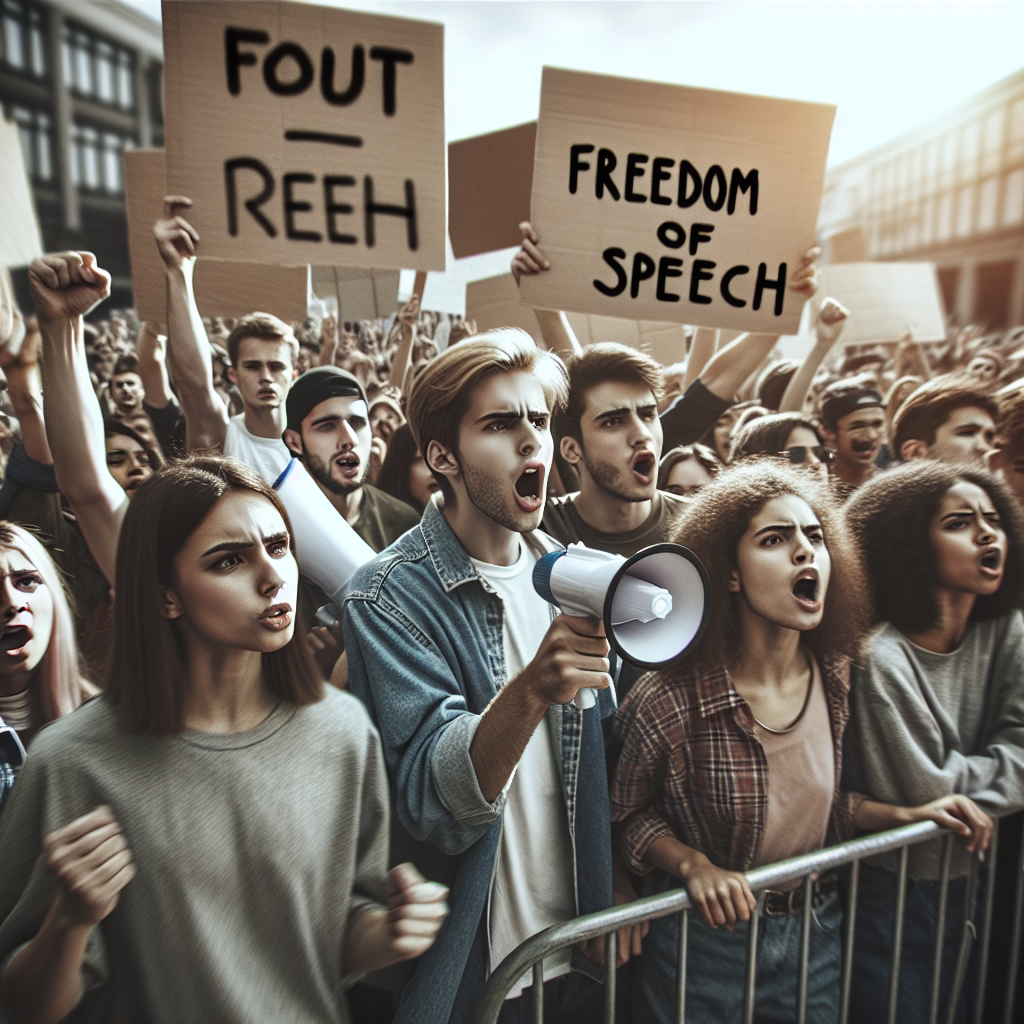
Speaking Freely or Too Freely? The Youth's Tryst with Freedom of Speech
In today's digital age, the concept of freedom of speech is more alive and kicking than ever before, especially among the younger generations. The youth are often seen as the torchbearers of free expression, pushing the boundaries of what's acceptable and what's not. But is there a line that's being crossed? Are young people taking undue advantage of the liberty that is freedom of speech?
The Power of Words in the Digital Playground
The rise of social media has given everyone a platform to voice their opinions. It's like a megaphone that can amplify your voice to reach the farthest corners of the world. With this power at their fingertips, the youth have become digital citizens, often engaging in online activism and sparking movements that travel faster than wildfire.
But with great power comes great responsibility. The digital playground is not all fun and games. Words can build, but they can also destroy. They can inspire, but they can also incite. It's a delicate balance, and sometimes, in the heat of the moment, the scales tip the wrong way.
The Misunderstood Generation?
It's easy to label the youth as reckless or irresponsible, but is that fair? Perhaps they are just misunderstood. After all, this is a generation that's grown up with technology as their constant companion. They've witnessed the world change at a breakneck pace and have adapted just as quickly.
The youth are not just mindlessly exercising their freedom of speech; they're using it to challenge the status quo, to fight for what they believe in. They're passionate, they're vocal, and they're not afraid to shake things up. But sometimes, passion can overshadow prudence, and the line between advocacy and antagonism can blur.
The Ethics of Expression
Ethical communication is a cornerstone of civil discourse. It's about respecting different viewpoints, agreeing to disagree, and engaging in constructive conversations. However, when the youth push the envelope, they're sometimes accused of flouting these ethical standards.
The question is, are they really disregarding the ethics of expression, or are they simply redefining them? In a world that's constantly evolving, perhaps the rules of engagement need to evolve too. But even then, there's a need for a common ground—a set of principles that everyone can agree on.
The Societal Impact of Unbridled Speech
The impact of unchecked freedom of speech can be far-reaching. It can polarize communities, spread misinformation, and even lead to real-world consequences. When young people, with their substantial influence on social media, express themselves without a filter, the ripple effects can be significant.
It's not just about what's being said; it's also about how it's being said. Tone, context, and intent all play a role in how messages are received. And in the digital world, where nuances often get lost in translation, the potential for misunderstanding is high.
Digital Responsibility: A Shared Burden
Digital responsibility is not just the youth's cross to bear; it's a shared burden. Parents, educators, and society at large have a role to play in guiding young people as they navigate the complexities of free expression.
It's about setting examples, having open discussions, and creating an environment where ethical communication is not just encouraged but expected. It's about teaching the youth that with the right to speak freely comes the duty to listen, to reflect, and to consider the weight of their words.
Online Activism: A Force for Good or a Double-Edged Sword?
Online activism has been a game-changer. It's allowed the youth to rally for causes that matter to them, to spread awareness, and to effect change. But it can also be a double-edged sword. When activism turns into slacktivism, or when it's driven by the desire for viral fame rather than genuine concern, the essence of the movement is lost.
It's crucial for young activists to understand that true change requires more than just a hashtag or a social media post. It requires action, persistence, and, most importantly, a message that's grounded in truth and respect.
The Role of Civil Discourse in a Free Society
Civil discourse is the bedrock of a free society. It allows for the exchange of ideas, the challenge of beliefs, and the growth of understanding. But when the youth use their freedom of speech to shut down opposing views or to spread hate, they undermine the very principle they're trying to uphold.
Encouraging civil discourse among young people means teaching them the art of listening, the value of empathy, and the importance of humility. It's about helping them to see that there's strength in vulnerability and power in patience.
The Future of Free Expression
Free expression is a fundamental human right, but it's also a responsibility. As the youth continue to shape the future, they must grapple with the consequences of their words and actions. They must learn to wield their freedom with care, to ensure that it uplifts rather than undermines.
The future of free expression lies in the hands of the youth, and it's a future that's full of potential. With guidance, with understanding, and with a commitment to ethical communication, the youth can lead the way to a society where freedom of speech is cherished and exercised with the dignity it deserves.
Conclusion
The youth are not taking undue advantage of freedom of speech; they're exploring its boundaries. They're testing the waters and sometimes making waves. But that's what youth is about—discovery, growth, and change.
As a society, we must support them, guide them, and when necessary, gently steer them back on course. We must recognize that their voices are powerful, their perspectives are valuable, and their potential is limitless. Together, we can ensure that freedom of speech remains a force for good, a tool for change, and a testament to the indomitable spirit of the youth.


